Ground Penetrating Radar (GPR) systems - GSSI
Ice and Snow survey using GPR
Concrete Inspection
Utility Locating
Road Inspection
Geology
Archaeology
Bridge Inspection
Environmental Assessment
Ice and Snow
Agriculture and Forestry
Mining
Railway Evaluation
Forensics
Military and Security
Research
What is GPR?
What is EM?
FAQs

Ground Penetrating Radar for Ice and Snow Profiling

  • Overview
  • Ice Road Profiling
  • Glaciology Studies
  • Crevasse Detection

Arctic and Antarctic Research

Geophysicists, climatologists and civil engineers require a rugged and reliable tool to measure thickness and determine the structural aspects of ice and snow. GSSI ground penetrating radar has long been the industry standard in ice and snow profiling, and is used for locating targets in ice, determining ice and snow thickness, ice road profiling, glaciology studies and crevasse detection.

Characterizing Ice Road Thickness with Ground Penetrating Radar

Ice road construction companies use GSSI ground penetrating radar to gather ice thickness information and determine whether travel over icy passages is safe. The Canadian diamond mining industry relies on ground penetrating radar to determine if manufactured frozen ice roads are secure.

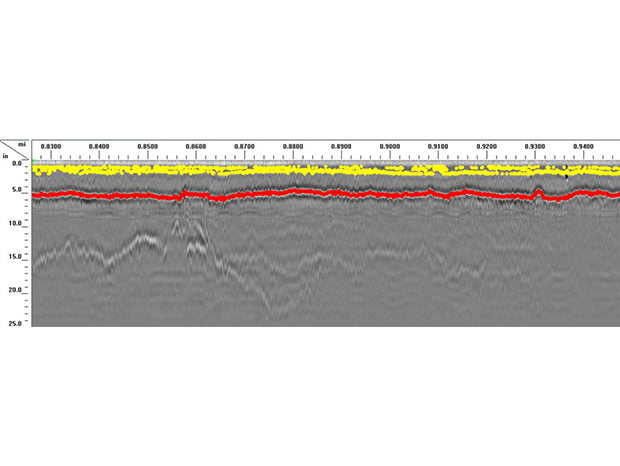
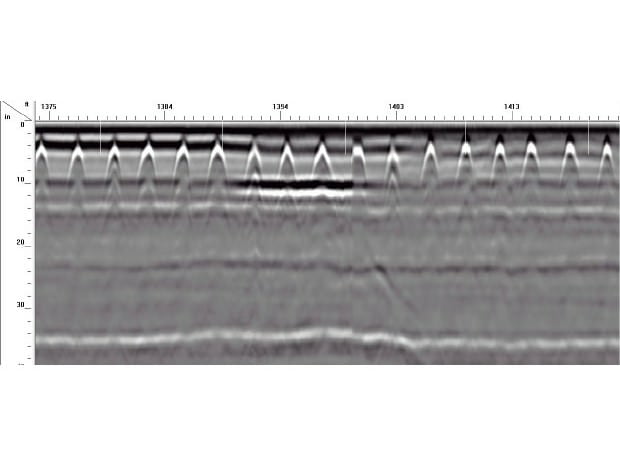
Ice/water interface on an ice road in northern Canada. Data collected with a SIR-3000 and a 400 MHz antenna.

GPR survey to measure ice road thickness

Examine Glaciers with GSSI GPR Systems

Research scientists use ground penetrating radar to study the internal structure of glaciers. The properties of ice allow for large penetration depths while producing strikingly high-resolution data sets of glacial ice.

Bedrock interface through glacial ice, highlighting detailed stratigraphy. Data collected with a SIR-3000 and low frequency antenna.

GPR survey of glacier

Detect Crevasses with GSSI Ground Penetrating Radar

Scientific teams and civil engineers use ground penetrating radar to ensure the safe passage of vehicles and people over glacial ice. Glacial features, such as shear zones, create hazards that can be detected and avoided by using ground penetrating radar.

Large crevasse in Antarctica - data is typically collected with the antenna positioned well in front of a vehicle, allowing ample time for the vehicle to stop before crossing the crevasse. Data collected with SIR-20 and 400 MHz antenna.

GPR survey for crevasse detection

GSSI Recommends:

SIR-3000, SIR-20
Antenna: 400 MHz

Copyright © 2001-2008 Geophysical Survey Systems, Inc.
All Rights Reserved

Geophysical Survey Systems, Inc.
A Wholly Owned Subsidiary of OYO Corporation

Email GSSI  | Tel: 603.893.1109